
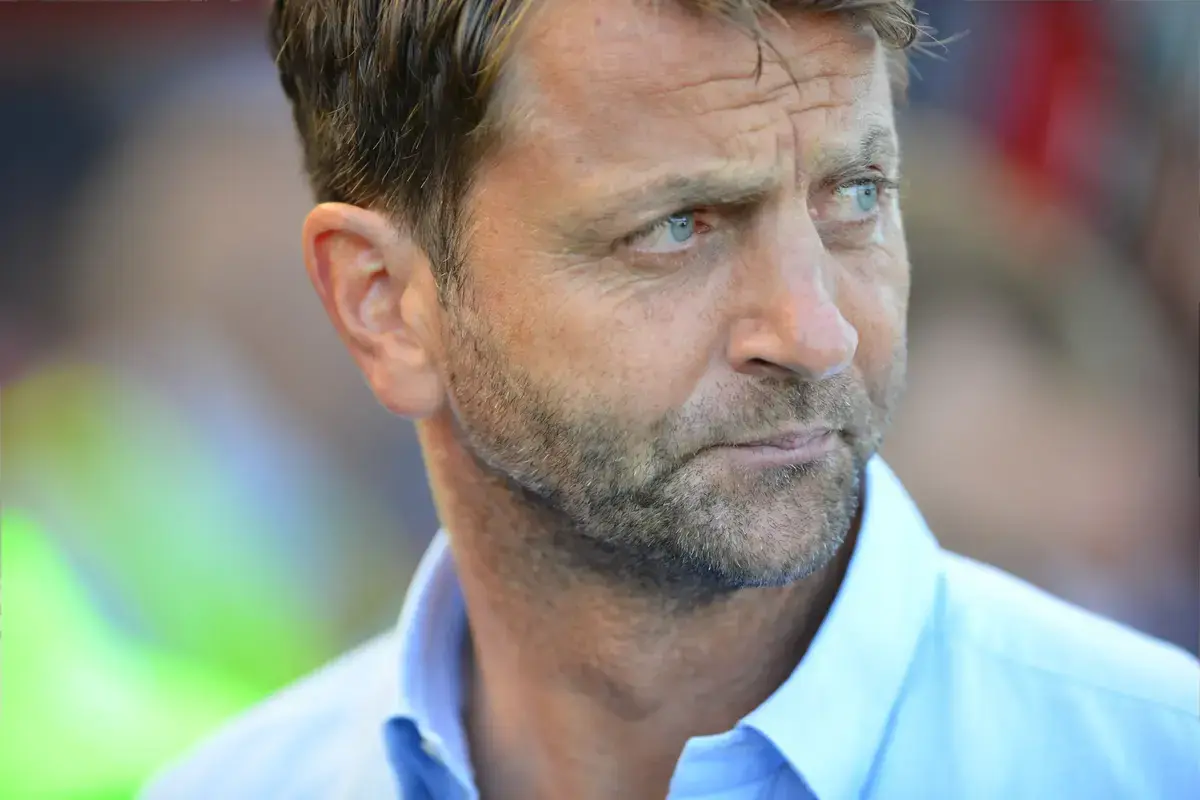
Tim Sherwood’s time as Tottenham Hotspur manager was brief but memorable, spanning from December 2013 to May 2014 (initially as interim/caretaker before being appointed permanently). He took over from André Villas-Boas amid a mid-season slump, with Spurs sitting around 7th/8th in the Premier League.
Managerial Record at Spurs
- Games: 28 (including a short caretaker spell)
- Wins: 14
- Draws: 4
- Losses: 10
- Win percentage: Around 50% overall; approximately 59% in the Premier League (13 wins from 22 league games in one commonly cited stat). This was, at the time, the highest win percentage of any Tottenham manager in the Premier League era.
He guided Spurs to a 6th-place finish in the 2013-14 Premier League season (69 points), securing a Europa League spot. This was an improvement of one position from where they were when he took charge, though they remained well short of the Champions League places.
Positive Aspects of His Legacy
Sherwood is often credited with promoting and integrating young talent into the first team during a transitional period. Most notably:
- He gave significant opportunities to Harry Kane, who began establishing himself as a key player (Sherwood has frequently highlighted his role in Kane’s development).
- Other youngsters like Ryan Mason and Nabil Bentaleb also benefited from increased exposure.
Supporters and observers sometimes point to this youth-focused approach as a forward-thinking element, especially as Spurs later reaped rewards from that generation. Sherwood himself has repeatedly referenced his “legacy” at the club in interviews, citing the win record and player development as evidence of his impact.
His energetic, outspoken style (complete with memorable gilet fashion on the touchline) made him a colourful figure, and some fans appreciated the short-term uplift he provided after a disappointing spell under Villas-Boas.
Criticisms and Limitations
The tenure was polarising and ultimately short-lived—Sherwood was sacked shortly after the season ended by chairman Daniel Levy. Key points of criticism include:
- Tactical and disciplinary issues: There were high-profile rants at players (e.g., after heavy defeats like 4-0 to Chelsea), accusations of the squad lacking “character,” and inconsistent performances, including in big matches (such as the North London derby).
- The strong win percentage has been called misleading by some analysts because it doesn’t fully account for the context of a shortened sample size, easier fixtures at times, or points-per-game metrics. Spurs still finished 10 points off 4th place.
- No major trophies or sustained challenge for top honours; the football was often seen as pragmatic rather than visionary.
- Sherwood later admitted that, with hindsight, he might not have taken the job, reflecting the pressure and instability at the club.
His overall managerial career (including a later unsuccessful spell at Aston Villa) has not burnished his reputation further, and as a pundit, he remains outspoken—sometimes critical of modern Spurs sides.
Overall Legacy
Sherwood’s Tottenham chapter is viewed as a mixed, transitional footnote rather than a defining era. He stabilised the ship briefly, delivered a solid win rate and Europa League qualification, and helped accelerate the integration of academy talents like Kane. However, it lacked long-term vision, tactical consistency, or major success, leading to his swift departure.
Fans’ memories are often divided: some recall him fondly as a passionate club man who backed youth, while others see it as an underwhelming interim solution in Spurs’ long search for stability (pre-Pochettino).In recent years, as Tottenham have faced managerial turbulence, Sherwood’s name occasionally surfaces in speculation or debates about the club’s history—but rarely as a serious benchmark for success.
Tim’s impact is most enduring through the players he helped launch rather than silverware or style of play.
